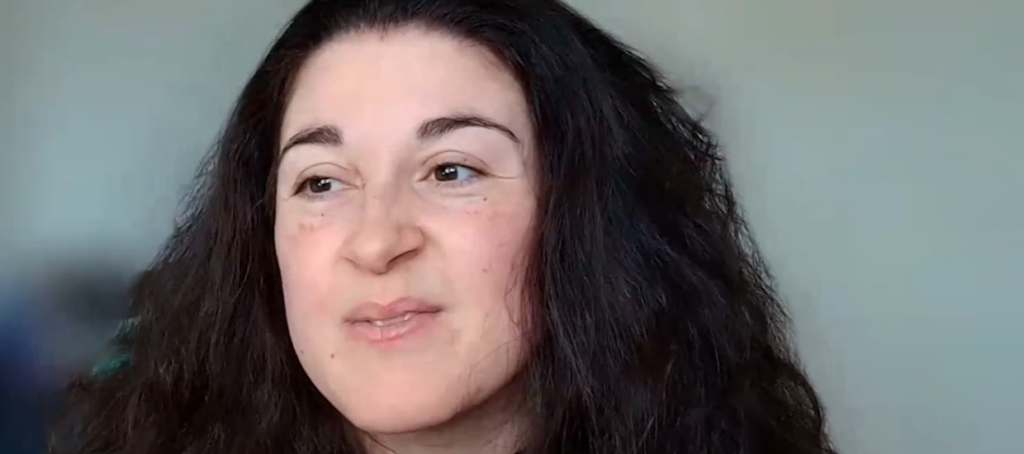
Do you feel like you don’t have enough experience to land a job? Our ‘How to Get a Job with No Experience’ webinar, delivered by Career Coach Farrah Morgan, explores how your hobbies, projects and extracurricular activities can count as real experience and shares a practical framework to help you showcase them confidently to employers.
Debunking the “no experience” myth
Do you believe you have no experience? Farrah explains how just by living your life, you’ve most likely studied, solved problems, collaborated with others, and taken on responsibilities, which is all experience and instead needs framing as “I don’t yet know how to position my experience”.
You may think that only the following is what is classed as experience:
- Full time work
- Internships
- Placement years
- Industry roles
- Paid work
- Recent work
If you have this experience, great; however, when it comes to getting hired at entry-level employers recognise that you’re at the beginning of your career. Here are a few more examples of experience Farrah provides that are also valid:
- Degree projects/experience
- Years abroad
- Retail and hospitality
- Temp and summer jobs
- Society memberships/committee roles
- School leadership/extra-curricular
- Sport & performing arts
- Volunteering
- Side hustles and passion projects
- Online personal brand
- Self-made portfolios
- Community/faith-based responsibilities
- D of E/Other physical challenges
At the interview stage, you can go into more personal experiences, such as:
- Family or caring responsibilities
- Being deeply involved in a community or a faith group
- Having a background as a migrant and having to relocate
These experiences show authenticity, core values, and strong storytelling skills. You must frame your experience as a victorious story focusing on what it built within you, what you learnt, and how it positively shaped you into the person and professional that you are today.
How employers access entry-level talent
Farrah says to think about how employers evaluate experience through a three-step process: experience > skills > results.
Every experience that you’ve ever had can be broken down into two key things:
1. The skills that you’ve used or developed as a result (skills show your future potential, what you’re capable of bringing to the role in the near future, even if you’ve technically never done it before)
2. The results or impact that came off the back of it (results show proof and demonstrate that you can achieve goals)
Therefore, it can be broken down into:
- Experience – what did you do?
- Skills – what strengths did you use or develop?
- Results – How did you make an impact?
Live CV demo
Farrah stressed the structure of your CV is important, especially the education section if your degree is related to the job you’re applying for. Instead of writing about your degree and the university you’ve studied at, it can become a golden opportunity to unpack key modules, major projects, or academic achievements.
Next, she encourages having an industry-relevant experience/project section where you can outline experience and link it back to the job description. This can cover what was outlined in the Debunking the “no experience” myth section, e.g. side hustles, passion projects, volunteer work, societies.
Try writing your experience with a powerful action verb + result + and how you achieved it, for example:
Treasure Netball Club (June 2022 – March 2023)
Elected treasurer for a 120-person club, working within a committee of 15 during 2nd year of university
- Managed an annual budget of £20,000 by allocating funds to multiple projects and investments, leading a sub-committee team of 3 to execute accurate monthly reconciliations and monitor team spending
- Generated 2 new sponsorship deals, increasing club funds by 45% by networking with local businesses, leading several negotiation meetings and finalising sponsorship agreements within a 4-week timeframe
- Reduced annual club costs by 15% by renegotiating deals with multiple travel vendors for monthly netball tournaments and identifying cost-saving deals online for 30-person accommodation and food
- Key skills: leadership and project management, financial analysis, business partnering and negotiation
Watch clip to view more examples >>
Q&A
- For writing a cover letter, what are the essential points that need to be taken into consideration?
- In interviews, if employers ask why you’ve got experience across different fields, implying that you’re not focused, how can you communicate it positively to them?
- I’m struggling to land a role in my sector which is environmental, geography, civil engineering, after graduating with my masters. My industry is very niche and I’ve been rejected from a lot of grad schemes. I’m not sure if applying to very non-relevant roles is wise?
- What are your inputs for a person who has taken a gap year and opted for a career change?
- I got a distinction for most of my modules but due to extenuating circumstances, I will most likely fail and need to submit my dissertation. How do I frame my EC and having to accept my studies professionally?
- When qualifying experience, how do we generate or measure the numerical values?
- I finished my masters in August and have been applying since then. Is this a big gap?
You can also watch our previous webinars on ‘How to write a standout CV’ and ‘How to write a standout cover letter’.
If you’d like to keep updated on any future Unitemps events, follow us on social media: LinkedIn, X, Instagram, Facebook and TikTok.
Meet the speaker:

Farrah Morgan, Graduate Careers Coach at Farrah Burke Coaching
Farrah (The Grad Coach 🎓) is an ex-hiring manager for a Times Top 100 Graduate Employer and seasoned careers coach for students & graduates. Since becoming The Grad Coach in 2021, she has worked with 200+ young professionals 1:1 and 4000+ more within online webinars and her job search community Career Launch Club. Her support has landed clients final stage invites and offers from 42% of Times Top 100 Graduate Employers and generated approximately £3.7 million in starting salaries. She is also an accredited psychological coach and alumnus of Warwick University (Theatre and Performance 2013-16).
Last updated on 17 March 2026
Share this article